
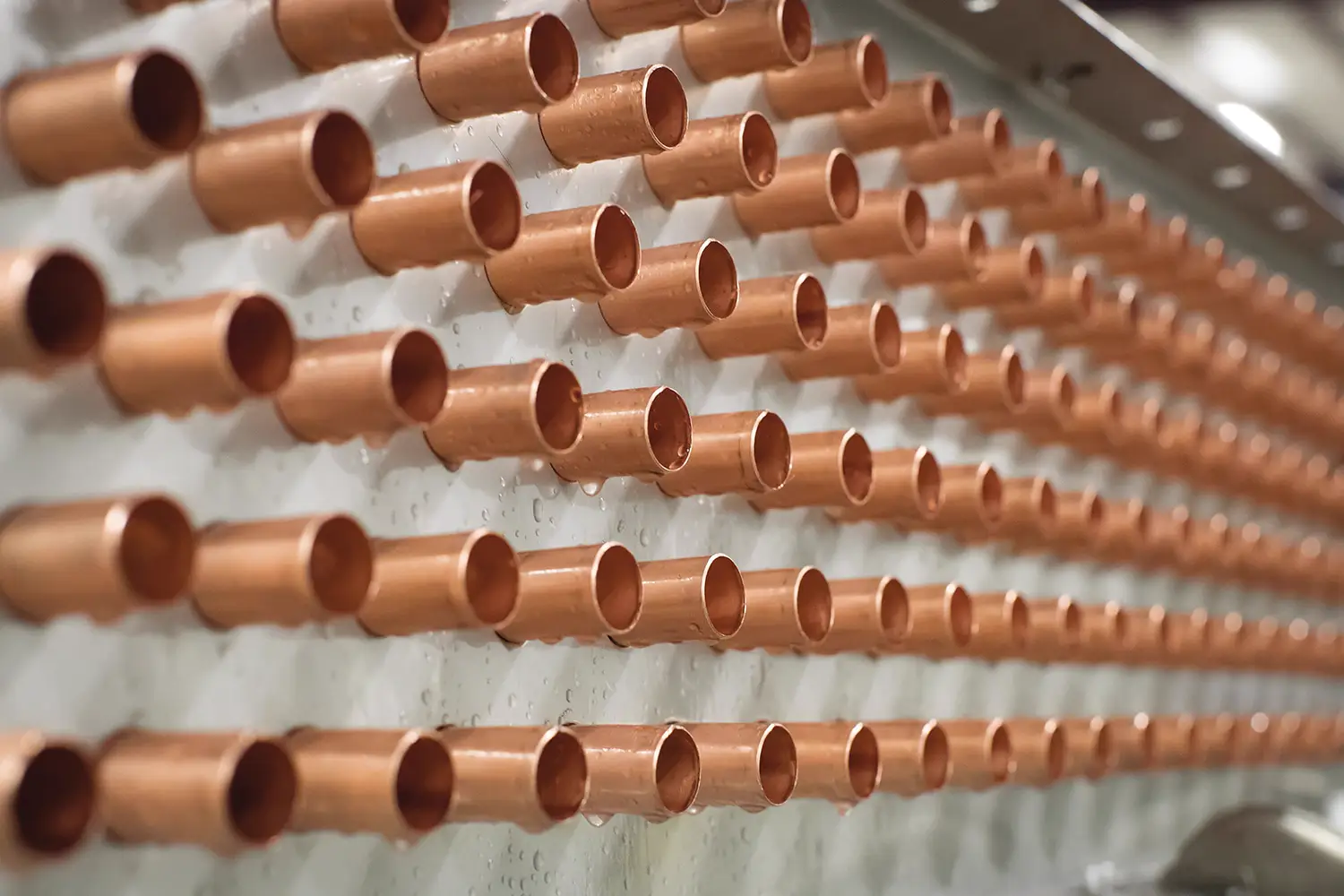
Microchannel coil replacement
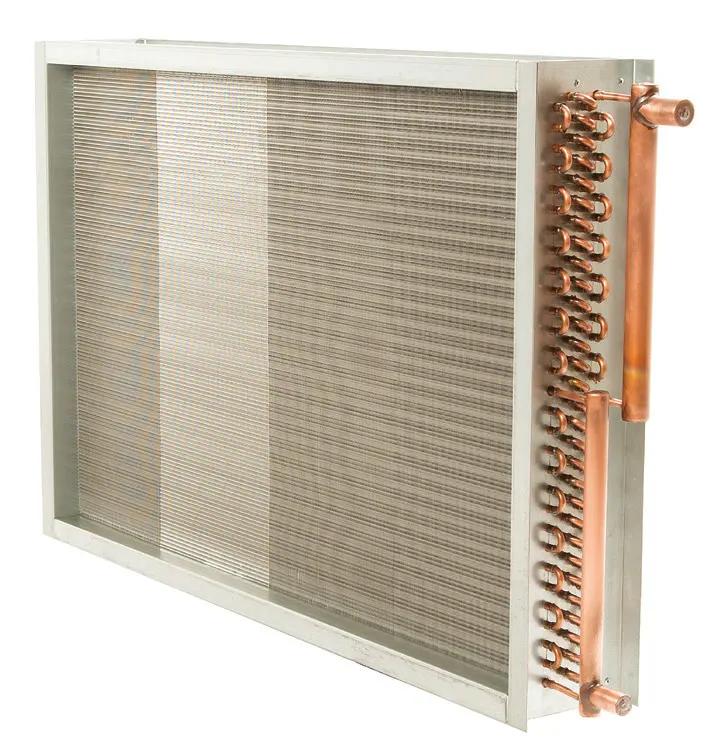
Microchannel coils, sometimes written micro channel coils, are flat aluminum tubes brazed to louvered aluminum fins. When one leaks or corrodes, you can replace it like for like or convert to a copper tube, aluminum fin coil built to fit the same space. We help you weigh the two for your unit.
When it is time to replace
Not sure whether to repair or replace? Send photos of the damage and we will give you a straight opinion.
Leaks that cannot be repaired
Microchannel leaks are hard to braze in the field, so a leaking coil usually means replacement.
Corrosion
All-aluminum coils in coastal or industrial air can corrode through quickly.
Repeat failures
A second or third replacement of the same coil is a reason to look at a conversion.
Hail or impact damage
Flattened fins and crushed tubes across the coil face.
What we confirm before we quote
You do not need all of this to start. Send what you have and we will help with the rest, by phone, by photo or with an onsite visit in the Upper Midwest.
- Unit nameplate
- Model and serial number of the rooftop or condensing unit.
- ACoil face height
- Height of the finned face.
- BCoil face length
- Length of the finned face; measure each face on wraparound coils.
- Available depth
- Space in the cabinet behind the coil. A copper tube conversion coil is usually deeper than the microchannel coil.
- Refrigerant and circuits
- Refrigerant, system charge and number of circuits.
- JConnections
- Hot gas inlet and liquid outlet size and location.
- Mounting
- Brackets, side plates and how the coil is fixed in the cabinet.
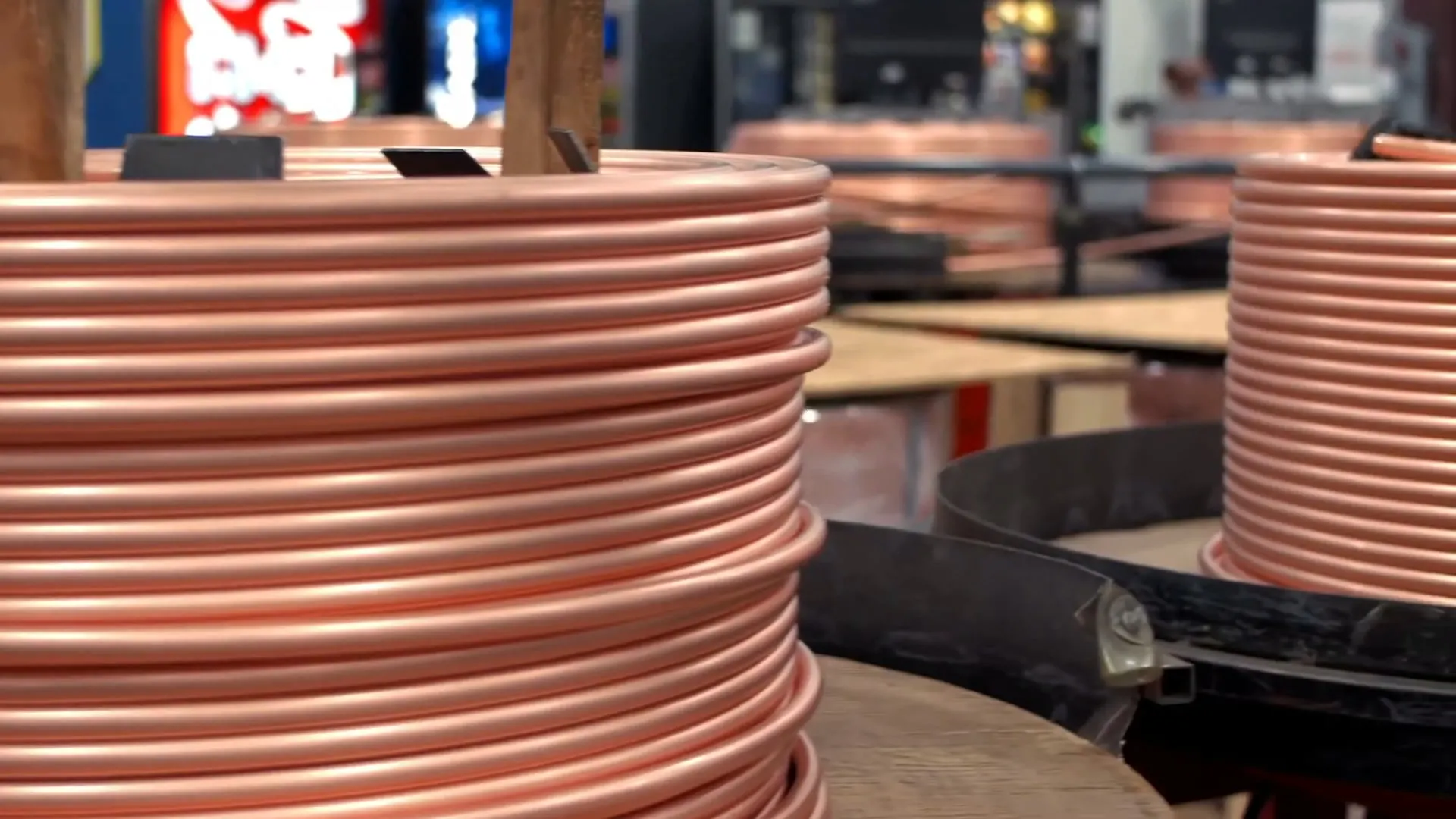
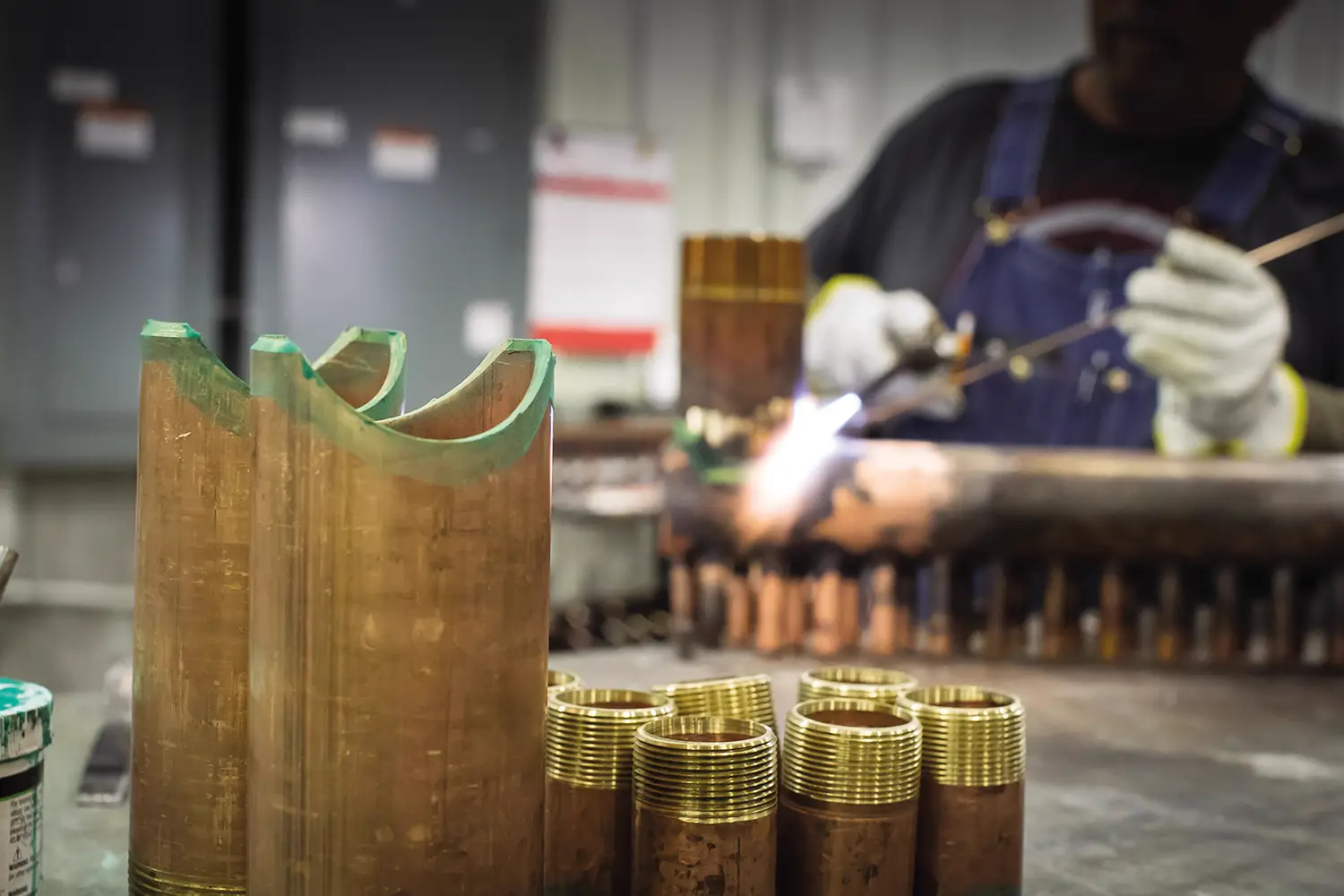
Built in America.
Rated. Tested.

Built in American plants
Our manufacturing partners’ plants are located in:
- Oklahoma City, OK
- Okarche, OK
- Moscow, TN
- Phoenix, AZ
- Tampa Bay, FL
- Fort Worth, TX

AHRI 410 rated selections
Coils within AHRI 410 scope can come with the manufacturer’s certified rating. Ask us to confirm for your coil.
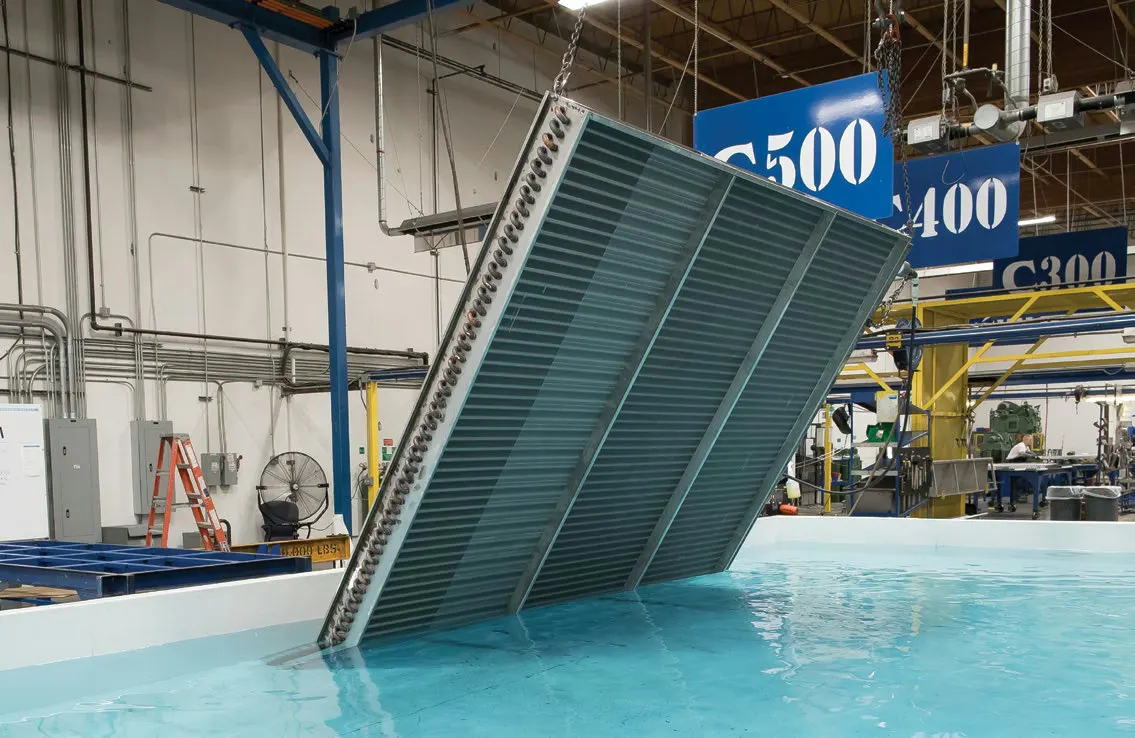
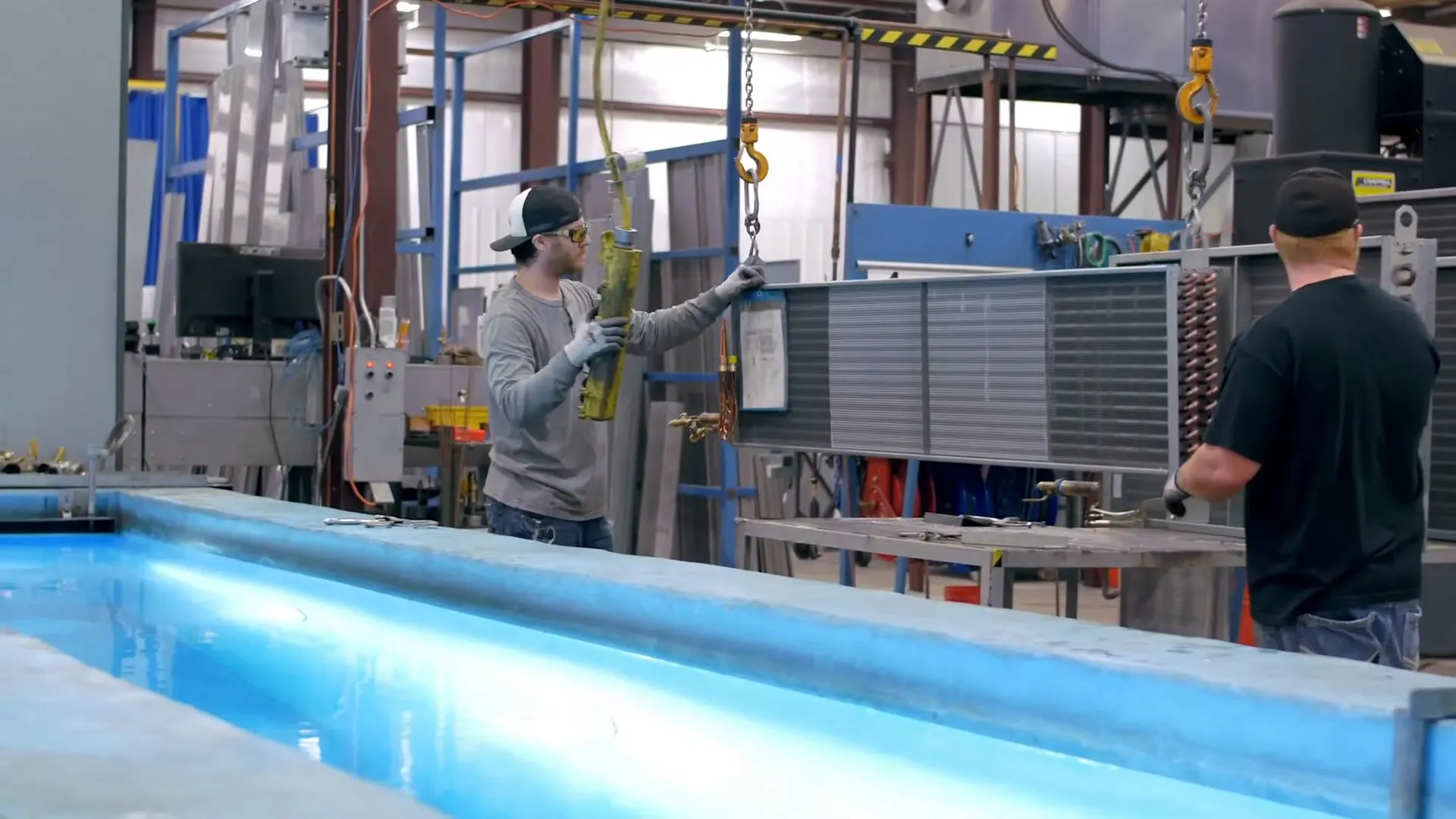
Leak tested under water
Every coil is pressurized and leak tested under water before it leaves the plant.
Construction notes
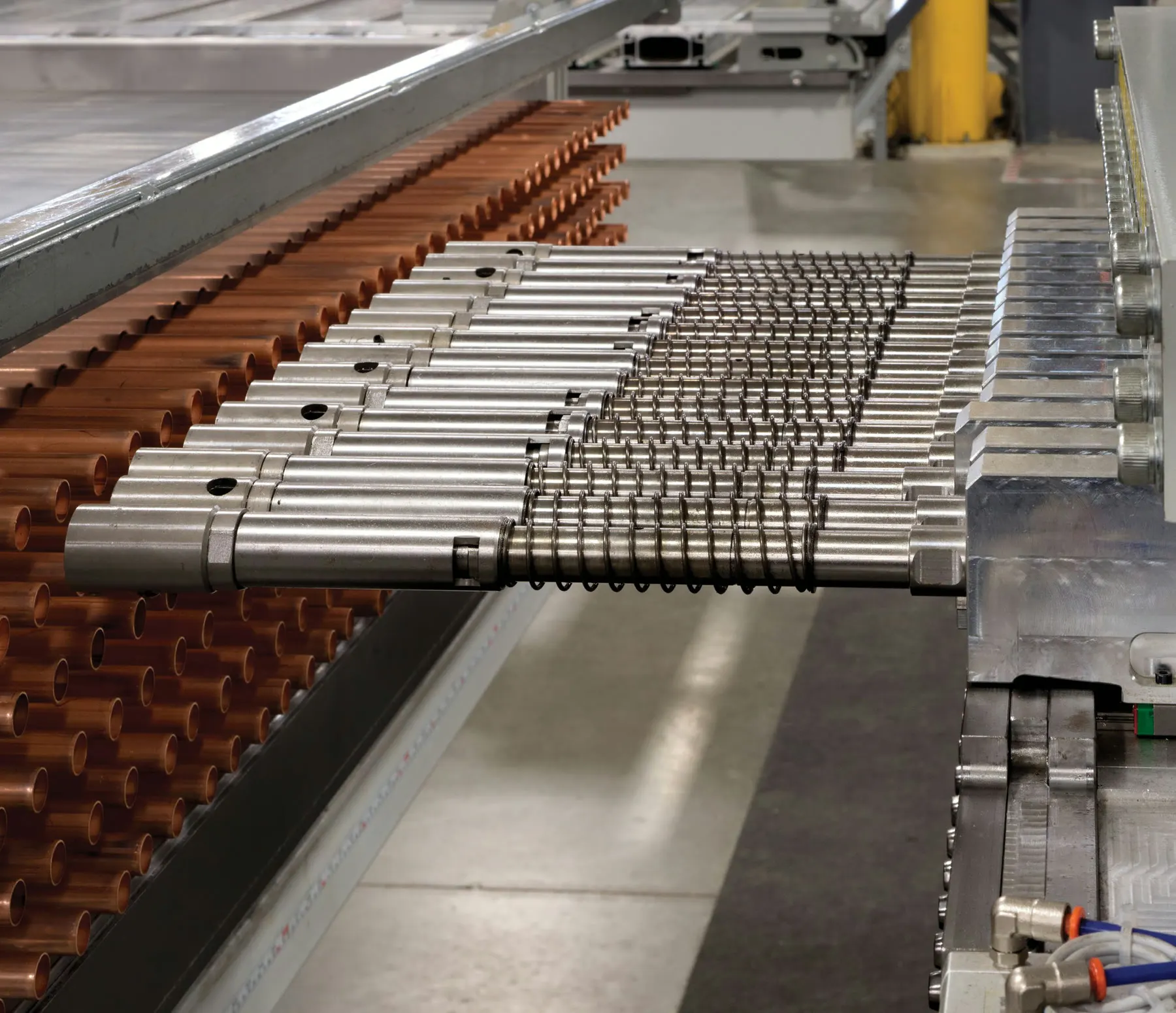
A copper tube, aluminum fin replacement holds more refrigerant than the microchannel coil it replaces, so the system charge changes and the cabinet has to have room for a deeper coil. We check both before quoting a conversion.
Where the unit design makes a conversion impractical, a replacement through the equipment manufacturer may be the better route, and we will say so.
Protective coatings can be specified for coils in corrosive locations.
Every coil we supply is built to order by an established coil manufacturer and ships direct from the plant. Coils within the scope of AHRI Standard 410 can be supplied with the manufacturer’s certified performance rating; ask us to confirm for your coil.
Frequently asked questions
Is a conversion better than a microchannel replacement?
It depends on the unit, the space and why the original failed. A conversion can be easier to repair later; a like-for-like coil keeps the original charge and fit. We lay out both for your unit.
Will a conversion change the refrigerant charge?
Yes. The system has to be recharged for the new coil, which the installing contractor handles.
Can a leaking microchannel coil be repaired?
Microchannel leaks are hard to braze in the field, so a leaking coil usually means replacement.
What do you need to quote a microchannel replacement?
The unit nameplate, the coil face height and length, the depth available in the cabinet, the refrigerant and circuits, the connections, and how the coil is mounted.
Replacing a microchannel coil?
Send the nameplate, photos of the coil face and both ends, and any measurements you have. We will tell you what else we need.