
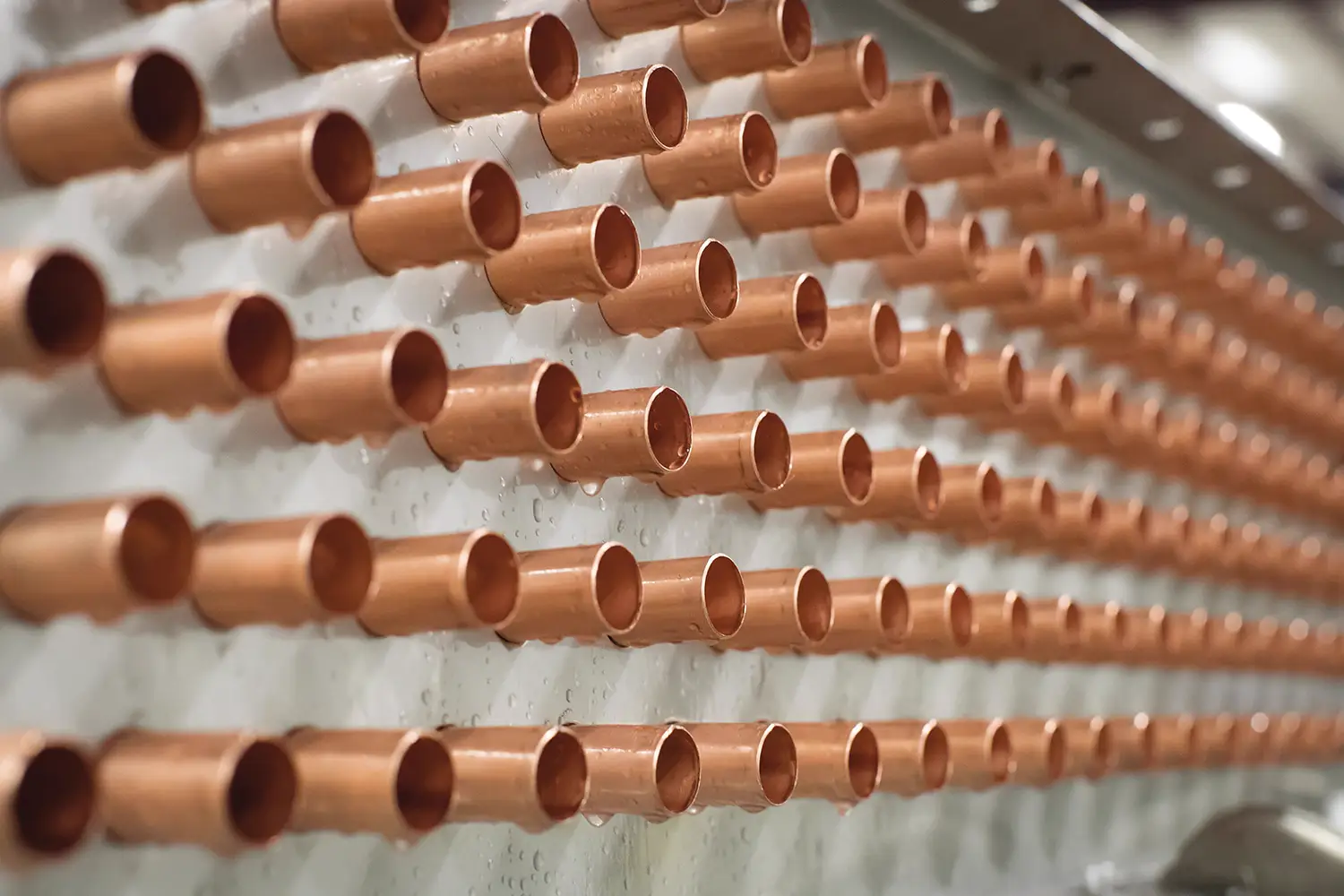
Standard steam coil replacement
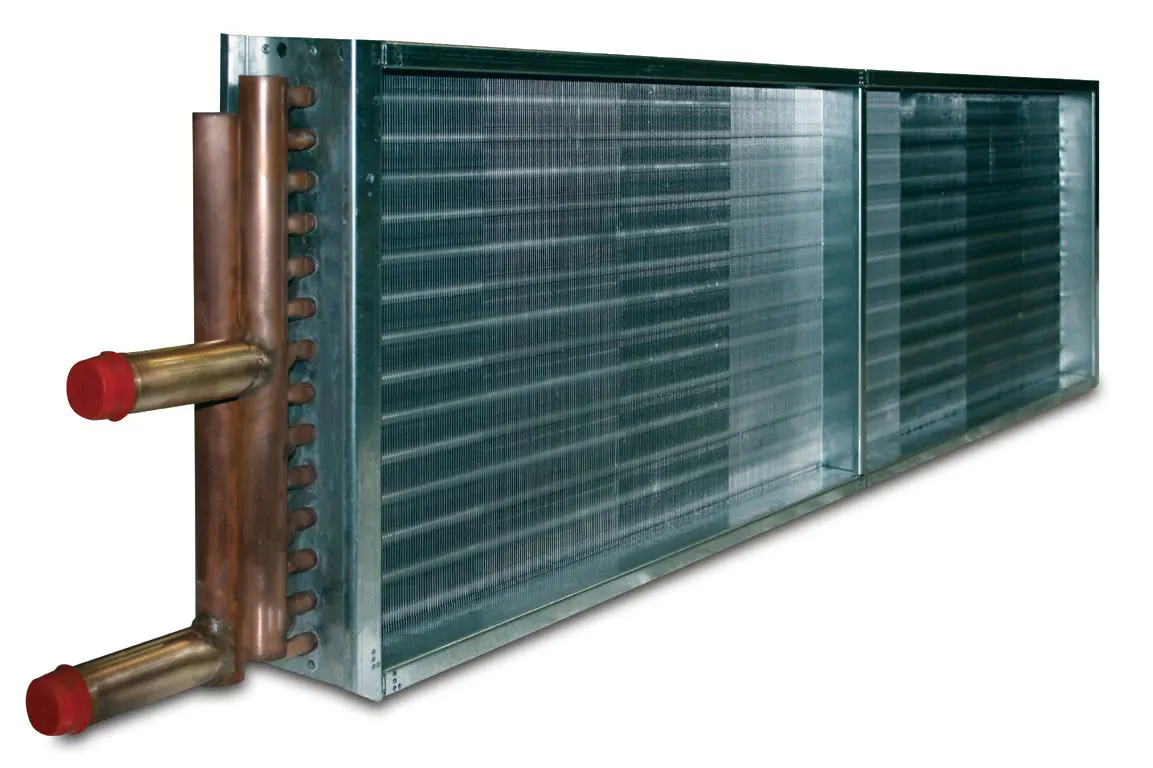
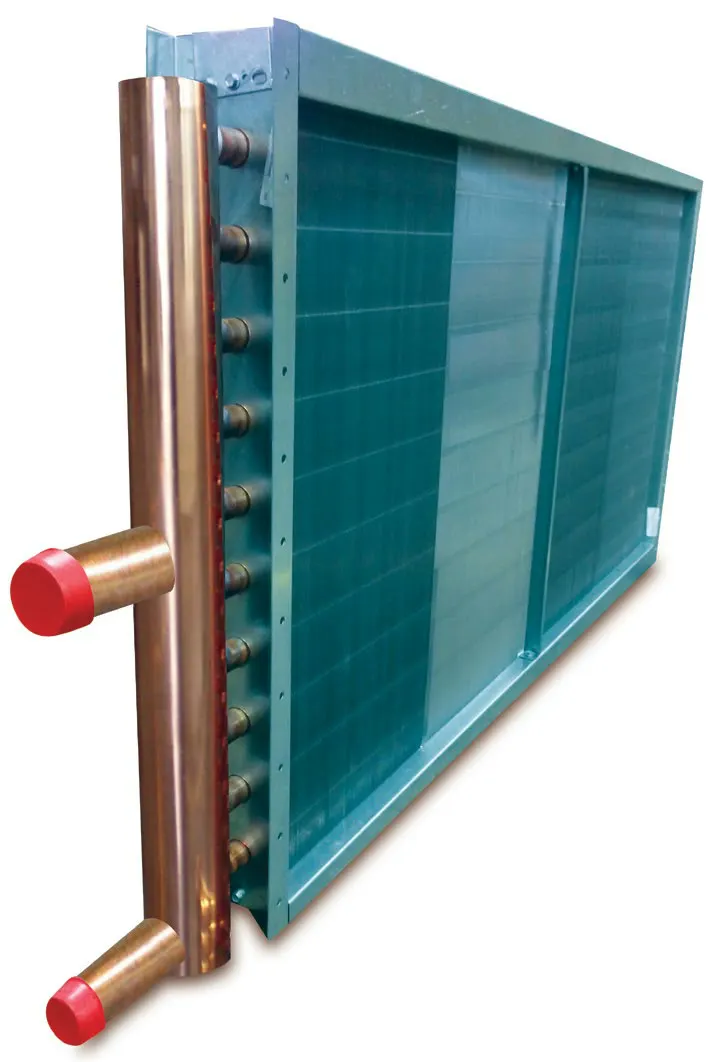
Replacement steam coils for air handlers, unit heaters and built-up systems. Standard steam coils heat air by condensing steam inside the tubes. We match the coil you have and select it for your steam pressure and airflow, with connections placed so condensate drains the way your traps expect.
When it is time to replace
Not sure whether to repair or replace? Send photos of the damage and we will give you a straight opinion.
Freeze-split tubes
The classic steam coil failure: condensate held in the tubes freezes when outside air drops below 32°F.
Water hammer damage
Banging at startup and cracked return bends or headers.
Cold spots across the face
Air or condensate pooling in part of the coil, often from failed traps or a missing vacuum breaker.
Corroded casing or headers
Common in older coils near outside air intakes.
What we confirm before we quote
You do not need all of this to start. Send what you have and we will help with the rest, by phone, by photo or with an onsite visit in the Upper Midwest.
- AFin height
- Finned area inside the casing.
- BFin length
- Finned length between tube sheets.
- Rows and tube size
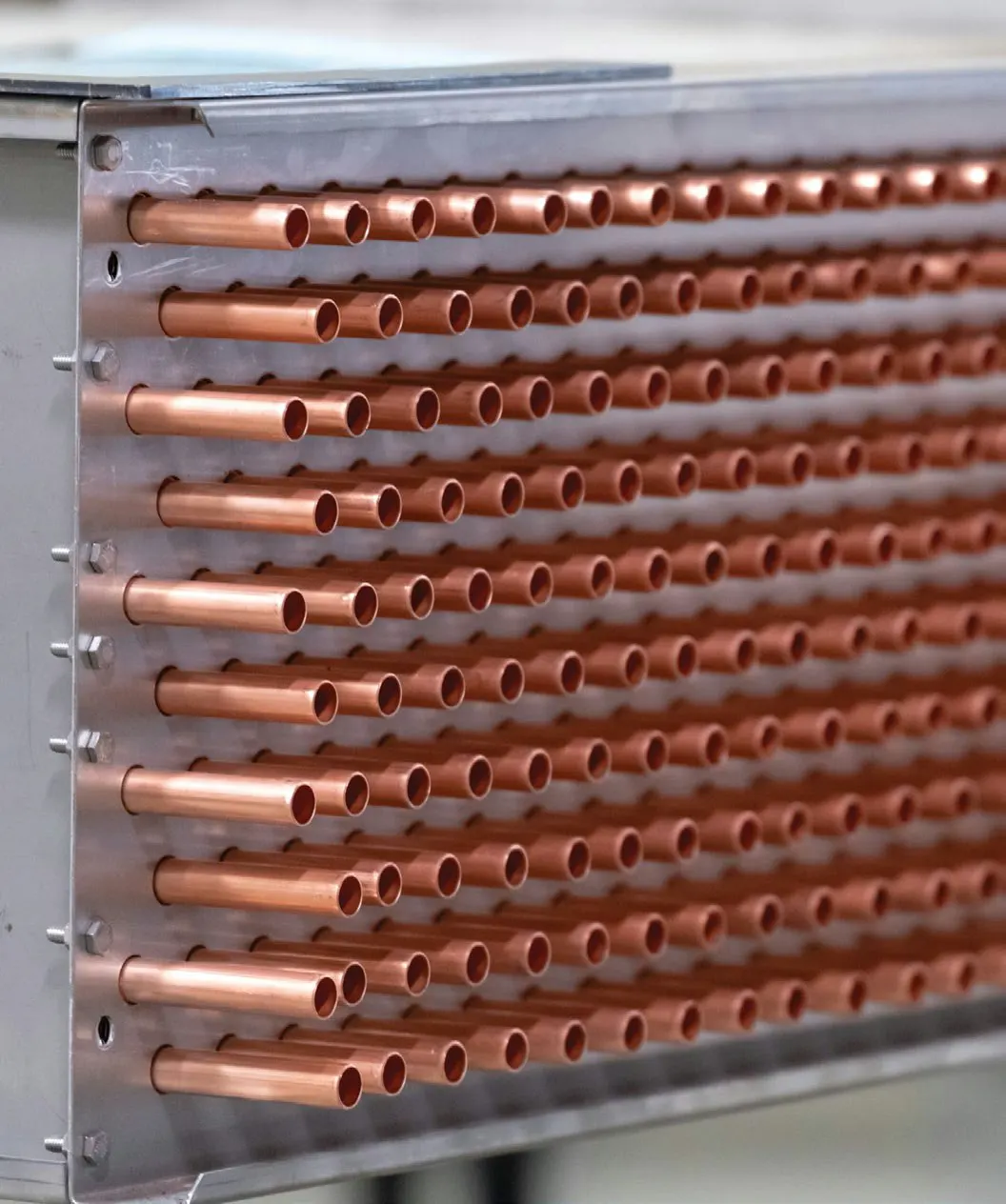
- Standard steam coils are usually one or two rows of 5/8 in. tube.
- JSupply and condensate connections
- Size, type and location of the supply and return. Same-end coils have both on one end; opposite-end coils have one on each end.
- Steam pressure
- Operating pressure sets tube wall thickness and capacity.
- Pitch and orientation
- Whether the coil is horizontal or vertical and which way it is pitched to drain.
- H, ICasing and overall size
- Casing depth, flanges and overall length.
- Performance
- Airflow, entering air temperature and the leaving air temperature you need.
Built in America.
Rated. Tested.

Built in American plants
Our manufacturing partners’ plants are located in:
- Oklahoma City, OK
- Okarche, OK
- Moscow, TN
- Phoenix, AZ
- Tampa Bay, FL
- Fort Worth, TX

AHRI 410 rated selections
Coils within AHRI 410 scope can come with the manufacturer’s certified rating. Ask us to confirm for your coil.
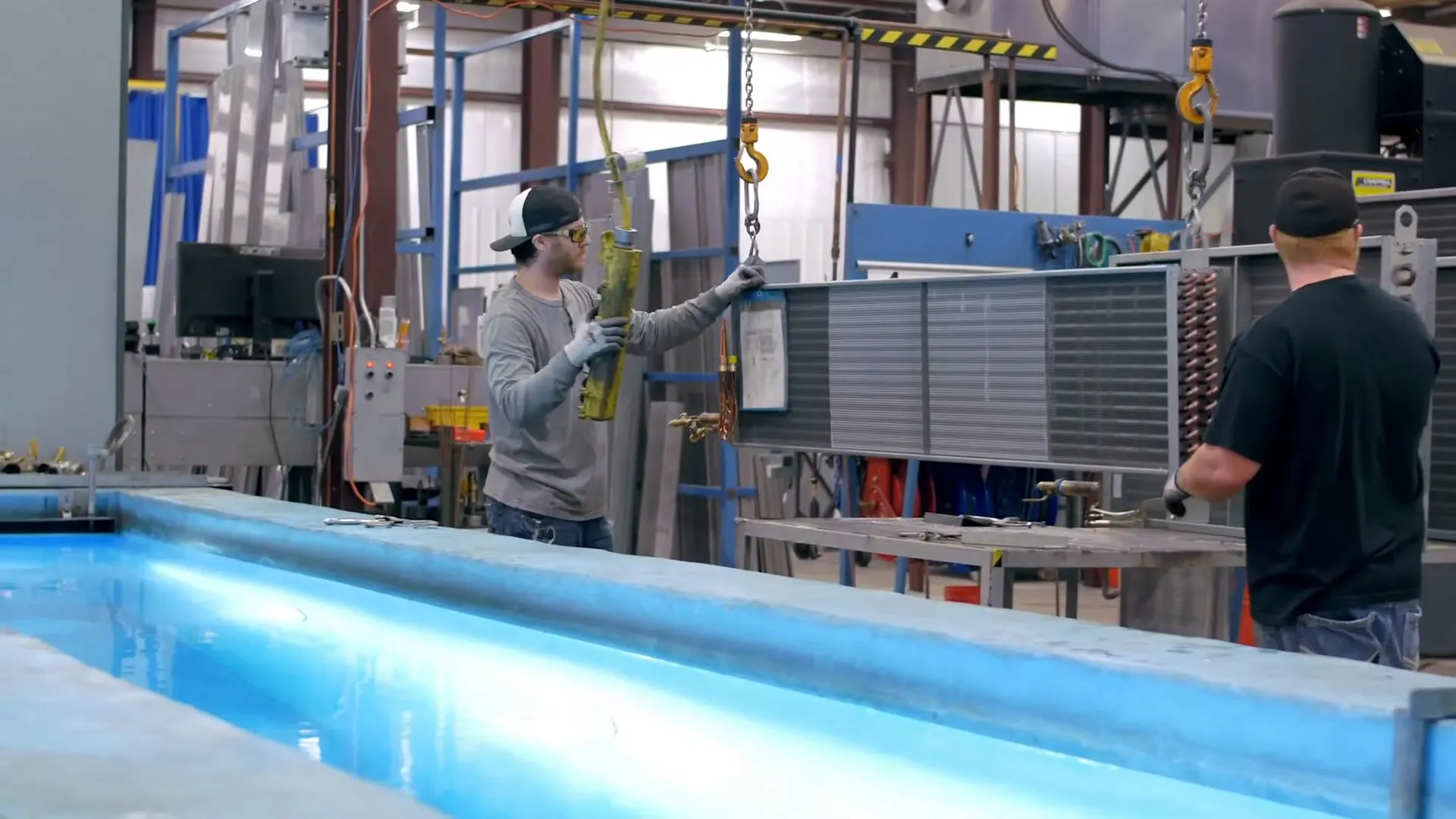
Leak tested under water
Every coil is pressurized and leak tested under water before it leaves the plant.
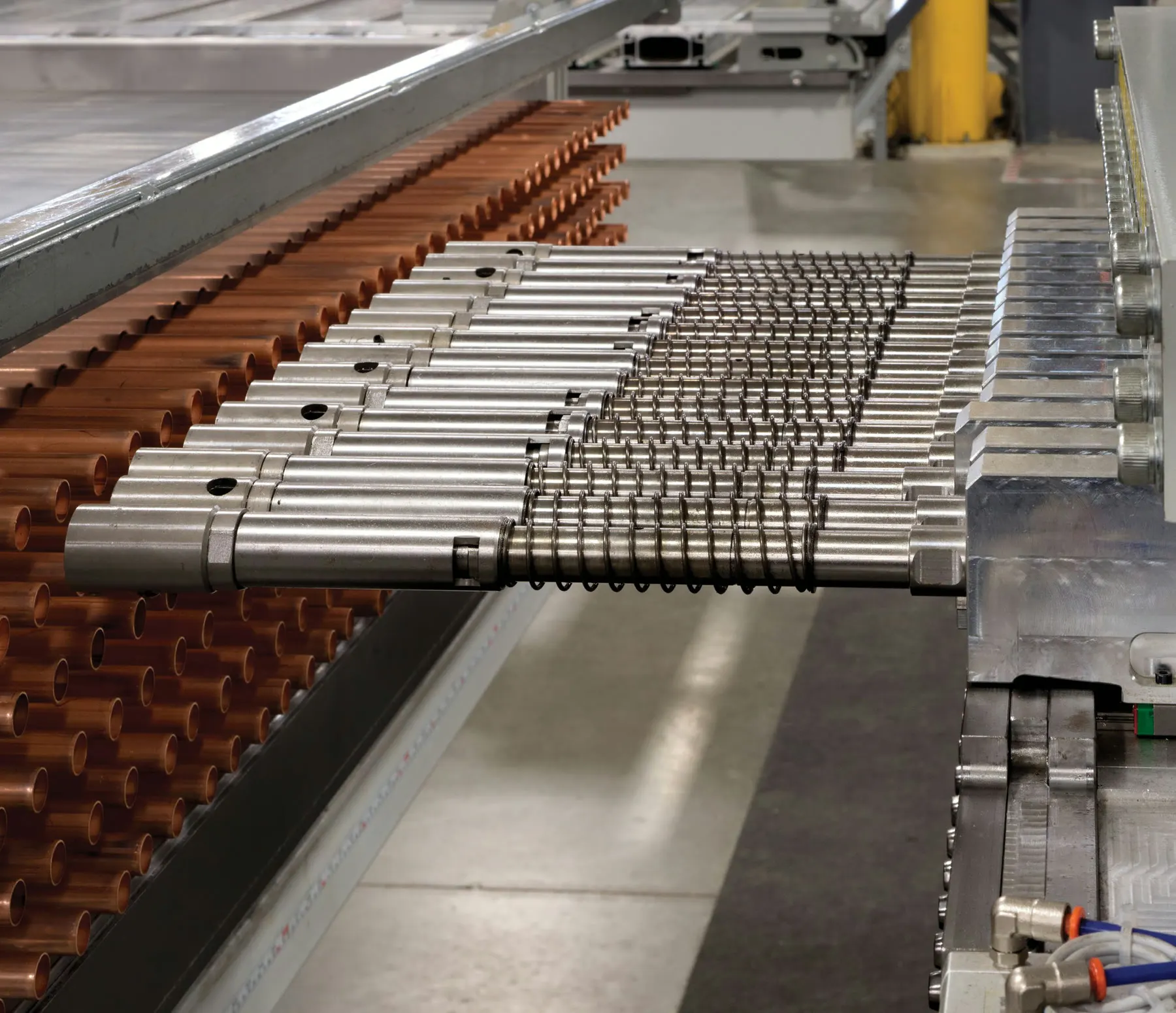
Construction notes
Standard steam coils condense steam in every tube, so they must drain freely. The coil is pitched toward the condensate connection, and supply and return sizes follow the steam load.
Where entering air can drop below freezing, a standard steam coil is a risk even when it is sized correctly. In those cases we will talk with you about a steam distribution coil, face and bypass control, or preheat, rather than just replacing like for like.
Every coil we supply is built to order by an established coil manufacturer and ships direct from the plant. Coils within the scope of AHRI Standard 410 can be supplied with the manufacturer’s certified performance rating; ask us to confirm for your coil.
Frequently asked questions
What is the difference between a standard steam coil and a steam distribution coil?
A standard steam coil condenses steam in every tube. A steam distribution coil carries steam through an inner tube with small orifices that spread it along the outer tube, which heats more evenly and drains better where entering air can drop below freezing.
How do I measure an existing steam coil before ordering a replacement?
Measure fin height and fin length inside the casing, count the rows, and note the tube size, the supply and condensate connection sizes and locations, the pitch and orientation, and the casing depth and overall length. Photograph the fin face and both ends.
How can I confirm a replacement steam coil is sized for my steam pressure?
Tell us the operating pressure at the coil, after the control valve if there is one. It sets the tube wall and the capacity, and we select the replacement for it along with your airflow and leaving air temperature.
Should I replace a standard steam coil like for like?
If the old coil froze, a like-for-like replacement will probably freeze again. We look at entering air temperature, controls and trapping, and may suggest a steam distribution coil instead.
Same-end or opposite-end connections?
Match what your piping has now. Same-end coils have the supply and condensate connections on one end; opposite-end coils have one on each end.
Replacing a standard steam coil?
Send the nameplate, photos of the coil face and both ends, and any measurements you have. We will tell you what else we need.