Before you start
- Lock out the unit and let hot water or steam coils cool.
- Photograph the unit nameplate and any tag on the coil itself.
- Work out the coil type: hot or chilled water, steam, steam distribution, DX evaporator or condenser. Refrigerant coils have a distributor with small feeder tubes; water coils usually have vent and drain plugs on the headers; steam coils have a large supply and a condensate connection at the low point.
- Stand on the entering-air side with the airflow at your back. Note which side the connections are on. That gives the hand.
The eleven measurements
- Fin height (A). The height of the finned area air passes through, inside the casing.
- Fin length (B). The length of the finned area between the tube sheets. Not the overall length.
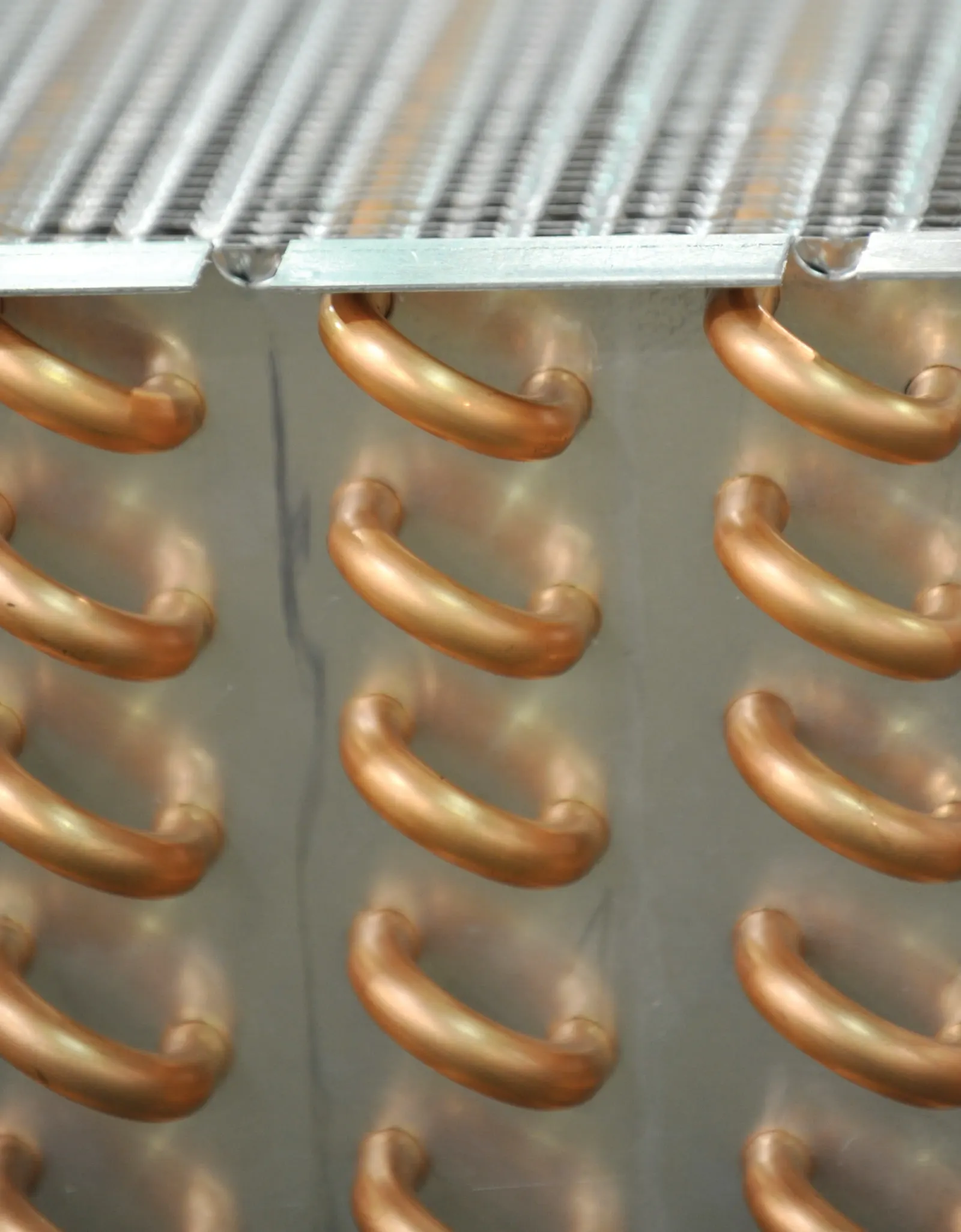
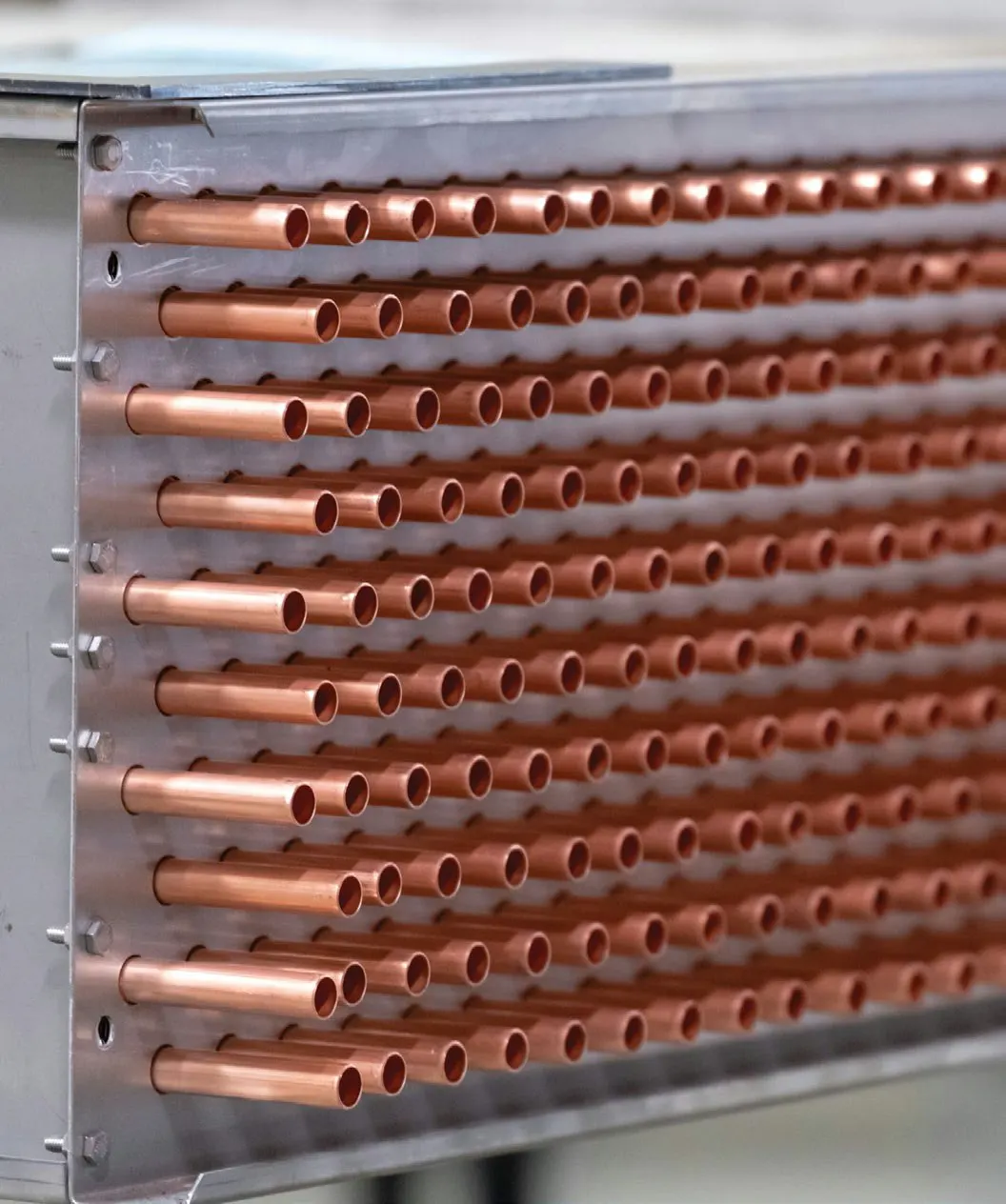
- Rows. Count the rows of tubes deep in the direction of airflow, from the entering face to the leaving face. Commercial coils run from one row to ten or more.
- Fins per inch. Lay a ruler across the fins and count the fins in one inch.
- Tube size. The outside diameter of the tubes, usually 1/2 in. or 5/8 in. on water, DX and condenser coils, and 5/8 in. to 1 in. nominal on steam coils.
- Tubes in the face and tubes fed. Count the tubes in one row from top to bottom, then the number of tubes connected to the supply header. Together they tell us the circuiting.
- Casing depth (H). The depth of the casing frame, front to back, not just the fin pack.
- Casing flanges. The width of the top, bottom and end flanges, and the casing height and length if the coil has to fit an existing opening.
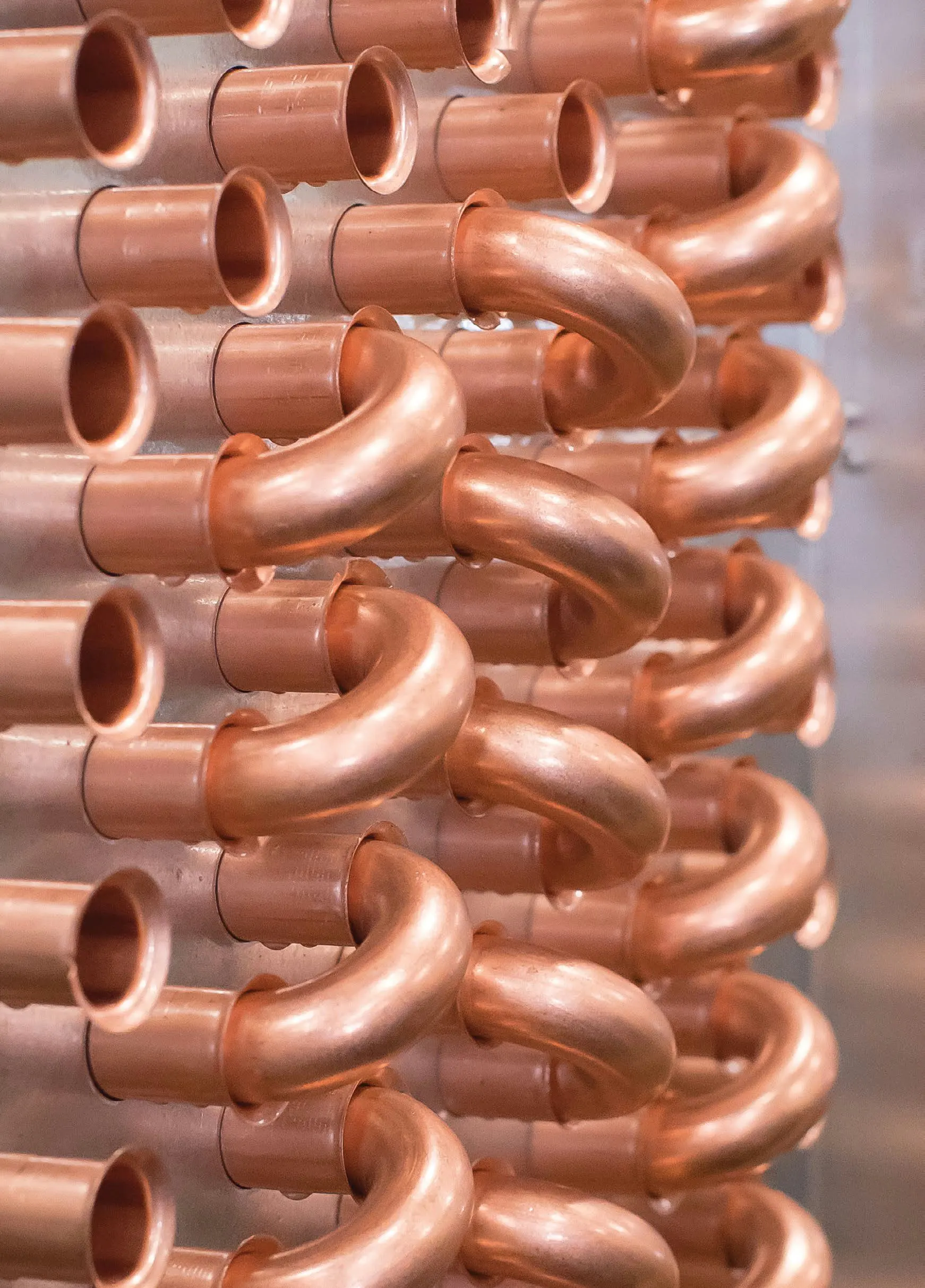
- Overall length (I). From the outside of the return bends to the outside of the header, not including the connection stubs.
- Connection length (J). How far the supply and return stubs stick out past the header, typically 1 to 8 in.
- Connection size, type and location. Diameter of each connection; male pipe thread, female pipe thread or sweat; same end or opposite end; and the distance from the bottom of the casing to each connection centerline.
Photos that save a site visit
- The fin face, straight on, with a tape measure across it.
- The header end showing every connection, and the return bend end.
- The coil in the unit, showing what surrounds it and how it comes out.
- Close-ups of any damage.
If you also know the operating conditions
Airflow in CFM, entering air temperatures, entering and leaving water temperatures or flow in GPM, steam pressure or refrigerant. They let us check the replacement's capacity instead of assuming the original was right.
No time to measure?Send the nameplate and photos. We will tell you exactly which measurements we still need, and in the Upper Midwest we can measure it for you.