First steps
- Close the supply and return valves to the coil and shut down or isolate the unit.
- Protect the space below from water: drain pans overflow and ceilings get wet.
- Do not simply refill and restart. A coil that froze can hold pressure until it thaws, then leak.
- Have your mechanical contractor drain, inspect and pressure test the coil.
How to tell if it is damaged
- Split tubes, often in the first rows on the entering-air side.
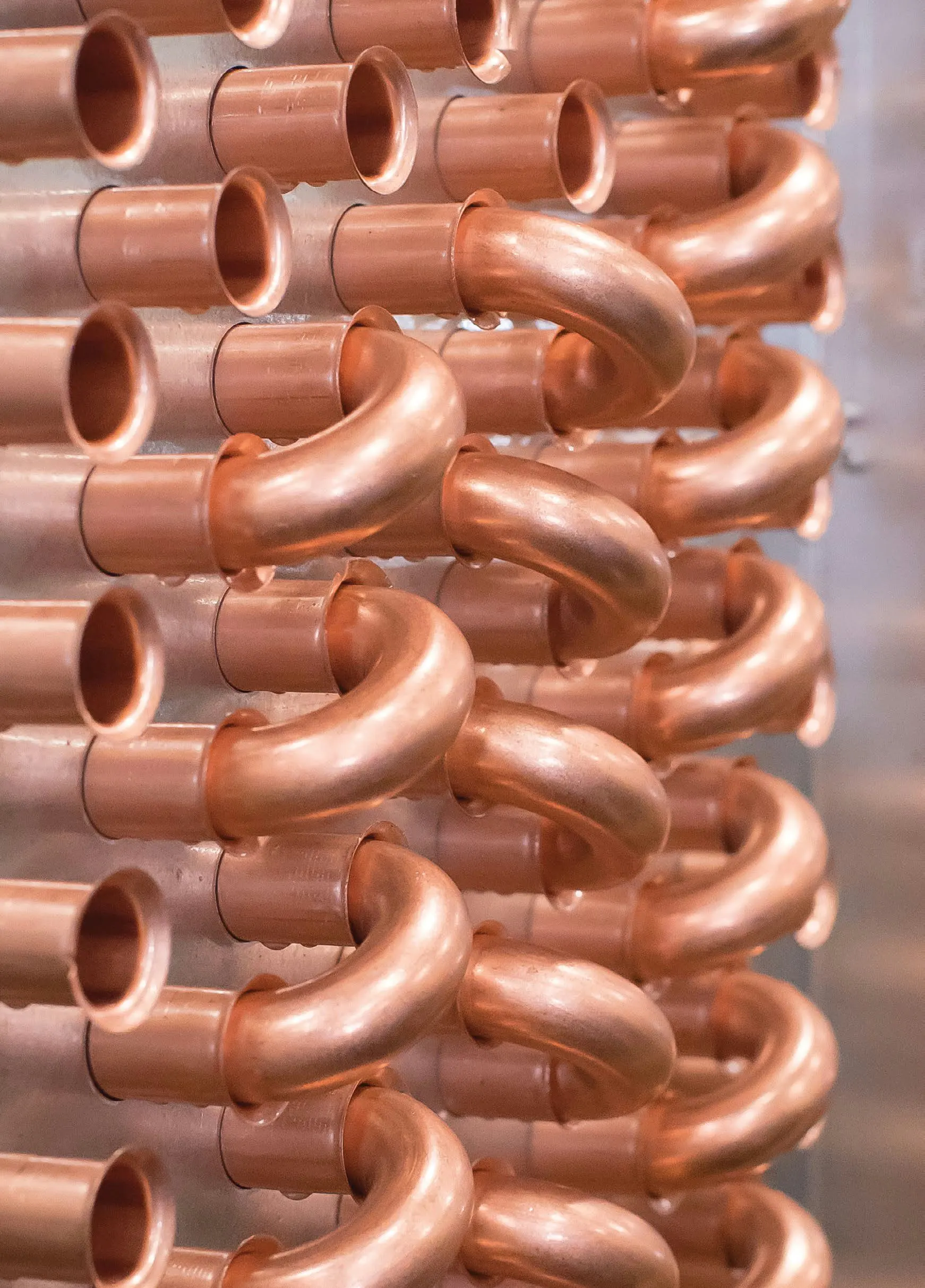
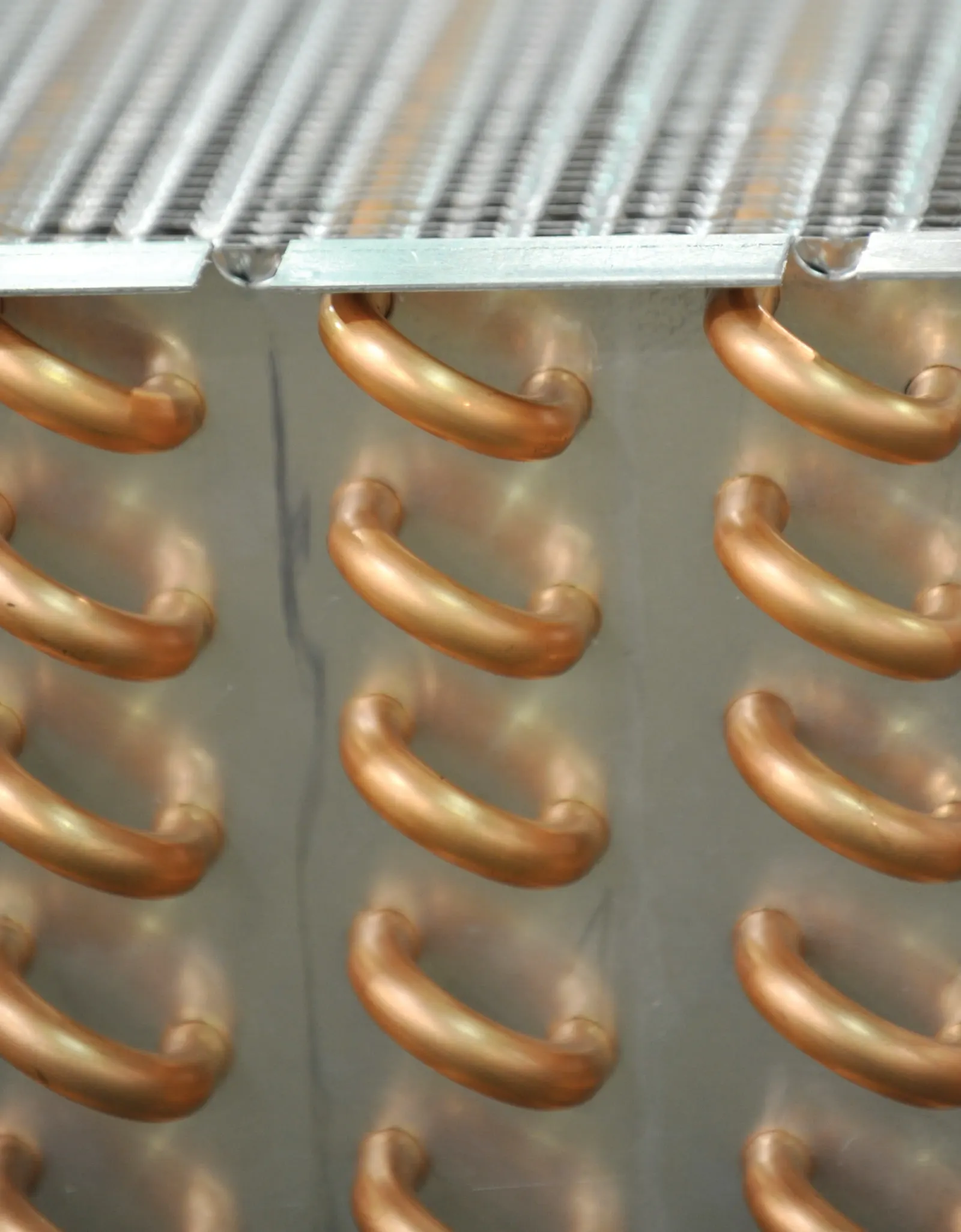
- Bulged or cracked return bends at the ends of the coil.
- Leaks that show up when the coil is refilled and pressurized.
- A coil that holds pressure but runs short of capacity can have internal damage too.
Repair or replace?
A few split return bends can sometimes be repaired by brazing. Splits inside the finned length, or damage across many tubes, usually mean replacement. Repeated repairs on a coil that keeps freezing rarely last; fix the cause and replace the coil.
Why it froze
- Outside air dampers open, or stuck open, in freezing weather.
- No flow, or flow too low, through the coil: a stopped pump or a closed control valve.
- A freezestat that failed, was bypassed, or is in the wrong place.
- Cold air stratified across part of the coil face.
- A cooling coil left full of water in a unit that sees winter air.
Preventing the next one
- Glycol in the loop where the coil can see freezing air.
- A circulating pump on preheat coils so water keeps moving.
- Freezestat placement across the coil face, and damper controls that close on alarm.
- Draining cooling coils that are not used in winter.
- Where outside air is the problem, a steam distribution or hot water preheat coil upstream. See hot water coils.
Need a replacement fast?
Send the nameplate and photos of the coil face and both ends. If the unit is down, call 612-868-4411; see emergency coil replacement.